Tuesday, May 01, 2007

Hawthorn (Crataegus monogyna) in flower

The flowering of the may is, to some pagans, a signal that Beltane has arrived, that summer has started. I like this as starting summer at Midsummer on 21 June seems rather odd.

So I offer you the hawthorn flowers photographed on May Day, 1 May, in Brickwall Deer Park, East Sussex, England.

Saturday, April 21, 2007

Wild cherry flowers (Prunus avium)


The wild cherries are flowering with particular magnificence this year in the Sussex countryside. They seem especially fine probably because it has been warm and sunny and there has been little rain or wind to shatter the blossom.

Their flowering gives the best of excuses to post A E Housman's poem:

LOVELIEST of trees, the cherry now
Is hung with bloom along the bough,
And stands about the woodland ride
Wearing white for Eastertide.

Now, of my threescore years and ten,
Twenty will not come again,
And take from seventy springs a score,
It only leaves me fifty more.

And since to look at things in bloom
Fifty springs are little room,
About the woodlands I will go
To see the cherry hung with snow.

Sunday, April 08, 2007

Tawny mining bee (Andrena fulva)


Today I was sitting in the sunshine in our garden in East Sussex when I noticed a bee visiting the flowers of wood spurge (Euphorbia amygdaloides): a striking contrast between lime green and auburn.

With its bright orange top and black underside it is easily determined as a tawny mining bee, a species I have not seen in the garden before, though it is common enough in England. Sometimes known as the 'lawn bee', the female digs holes like small volcanoes in short grass areas for her brood.

Tuesday, March 13, 2007

Bear's breeches (Acanthus mollis) in Hastings


In Victoria Road in the Ore area of Hastings, East Sussex, I came across this splendid plant of bear's breeches (Acanthus mollis).

The plant appeared to be self-sown and is clearly in abundant health.

Bear's breeches is a Mediterranean plant whose leaves, or that of Acanthus spinosa, are often considered to source of the acanthus leaf designs on architecture and furniture. Although an alien - it looks like an alien too - it is naturalised in parts of the West Country and judging by vigour of the plant above it might be about to start doing well in Sussex.

Why the plant is called 'bear's breech' I have been unable to discover: others may be able to enlighten me.

Sunday, February 18, 2007

Ants (Formica rufa) gathering sunshine


I was in Broadwater Forest, just south of Tunbridge Wells (and just in East Sussex) on a beautiful spring-like day earlier this week. One very striking feature was the huge wood ants (Formica rufa) nests that are common along most of the rides.

The warm sunshine had brought the ants out into the open but, instead of running allover the nest and everywhere else as they usually do, they were clustered tightly together in dark patches around the nest entrances. As they were not engaged in any food gathering activity, it would seem this behaviour was simply to warm themselves up before going back into the dark. Maybe they take a little heat indoors with them; maybe, like some humans, they enjoy sunbathing; or maybe they are unaware that the sunlight if February is likely to be of short duration.

John Pontin in his excellent book The Ants of Surrey (2005) says the insulation provided by the nests "retains the metabolic heat of the ants' activity", so perhaps they are gathering sunshine.

Thursday, February 15, 2007

Maidenhair spleenwort (Asplenium trichomanes)


Walking up Battle Road in Hastings the other day I came across a brick wall with many ferns in the mortar. There was the one above, maidenhair spleenwort, as well as hart's-tongue and black spleenwort.

Ferns like this are not all that common in walls beside busy roads in urban areas and I suspect there is something very fern-friendly in the mortar of this particular wall. Often it is that the cement is lime mortar rather than modern cement, but this wall does not really look old enough.

Anyway, long may they flourish.

Sunday, February 04, 2007

Two galls (Andricus aries and A. lignicola)


Today I found two galls, the cola nut gall (Andricus lignicola) and the ram's horn gall (Andricus aries) on the same oak twig on the Pestalozzi Estate here in Sedlescombe. The ram's horn gall (fairly obviously) is the upper one.

The ram's horn
was first recorded in Britain from Parliament Hill, London in 1998 and has since been seen in Kent, Surrey, Essex and Berkshire, so it appears to be spreading rapidly. It was first found in Sussex (so far as I know) in 2001. Elsewhere it occurs in mainland Europe, but does not seem all that common.

Sunday, January 14, 2007

Cola nut galls (Andricus lignicola)


In a scrubby field in St Leonards-on-Sea, East Sussex I found these cola nut galls (Andricus lignicola) yesterday growing on some young oak trees. The trees were most probably the hybrid (Quercus x rosacea) between pedunculate oak (Quercus robur) and sessile oak (Quercus petraea), not that I think this is of any significance so far as the galls are concerned.

They are caused by a small wasp and chemicals injected by the female at egg-laying time induce the galls to form, thus providing food for the larvae. The cola nut is a plant from tropical Africa and there is only a very superficial resemblance between it and these galls.

Although described as widespread and common, I have been unable to find any earlier Sussex records and, though seemingly not so frequent as the marble gall, I am sure it is overlooked rather than rare.

Tuesday, January 02, 2007

Wall screw-moss (Tortula muralis) in Hastings


I came across this small desert on top of the wall of the bridge that carries Linton Road across Braybrooke Terrace (where the cars below are parked) in Hastings today.

I have watched plants like this colonise bare stone. Often they start as the tiniest pieces along a seam or crack that retains a little more water than areas nearby, then spread out over a few years to form small cushions. Eventually they may join up and make a thin layer of soil where vascular plants can get a foothold and in no time at all you have a forest.

The cushions even at the stage they are at in the picture are often well populated with fauna such as springtails, nematodes, black fungus gnat larvae and the larvae of the parthenogenetic midge Bryophaenocladius furcatus. All these must be able to withstand long periods of desiccation when the moss cushions dry up in summer.

I have been reading Animate Earth by Stephan Harding (2006) and the following passage on life during interglacial periods seemed to be illustrated by these mosses: "Plants grow well in the new high carbon dioxide atmosphere. They send their roots deep in search of nutrients, cracking open rocks with sheer brute force and with the subtle but relentless dissolving powers of their acidic chemical exudations. One can almost hear the gentle grinding noise of the increased weathering as plants all over the planet pummel and pulverize the rock, releasing nutrients on a scale unknown during the time of ice. Myriads of phosphorus, iron, silicon, calcium atoms are captured by plant roots to be sucked up into the growing green biosphere which, in its heedles growth, draws out more and more carbon dioxide from the atmosphere."

Saturday, December 23, 2006

Wrinkled crust fungus, Phlebia radiata


I found this Martian landscape of a fungus when I was collecting firewood in the garden today. Usually it grows on oak, but this was on dead rowan branches.

Monday, December 18, 2006

A deer in sheep's clothing


In the fields of the Dudwell Valley east of Heathfield in East Sussex there are many fallow deer and, from time to time, they like to graze with the sheep.

This is classic Rudyard Kipling country of the High Weald opposite Pook's Hill where Puck resides.

Sunday, December 17, 2006

Blue tits in the Mahonias


We have quite a few Mahonia bushes in the garden here. With their long, late flowering racemes of yellow flowers, they often attract honey and bumble bees in midwinter.

Today though I noticed a few birds among the flowers and it was clear that blue tits have learned how to sip the nectar from the shallow inflorescences.

I wondered how widespread this was as I have not seen the birds doing this before though we have had the Mahonias for many years.

Thursday, December 14, 2006

Fungus or alga?


The blackberry-purple plant in the pictures above has completely defeated me. It was growing on a sheer 'cliff' of Purbeck limestone in a shady gill south of Burwash Common, East Sussex and had a texture and shape similar to a cup fungus. There were a few more higher up the bank where the limestone was covered in a very thin layer of moss, but I saw them nowhere else in the gill.

A mycologist friend has suggested they might be an alga rather than a fungus, but that is as far as I have got. If anyone can suggest what this might be, or who else I might ask, I would be very grateful

Wednesday, November 22, 2006

Veteran oak in the High Weald


As it is National Tree Week (22 November - 3 December), I thought I would post a picture of a wonderful ancient oak tree I came across a few days ago. It is deep in the countryside to the south of Burwash Weald, East Sussex and clearly has been pollarded long in the past. Despite the fact that its trunk is half missing and hollow it seems to be in robust health, though the more horizontal branches will be getting very heavy and will eventually fall.

It probably should be re-pollarded in stages, but this is a tricky course of action and it will be essential to get advice from experts in the management of ancient trees. The longer it survives, the more chance there will be for some of the invertebrates and lower plants associated with this kind of habitat to colonise the middle-aged oaks behind as they grow older.

Monday, November 13, 2006

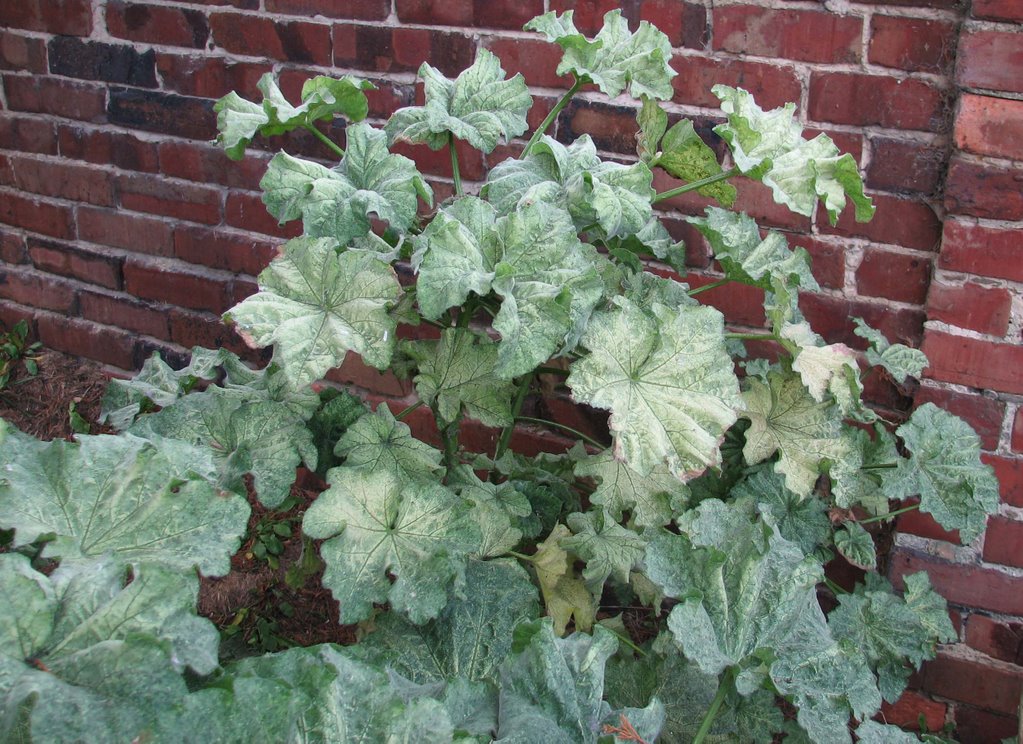
Tree mallow hopper, Eupteryx melissae


Another discovery from my epic field trip to the suburbs of Bexhill-on-Sea. In an abandoned garden I found many large plants of tree mallow, Lavatera arborea. Their leaves were an unusual whitish green (see top picture), undoubtedly the effect of locust-like numbers of the plant hopper Eupteryx melissae that flew from the mallows in clouds evey time one of the plants was shaken.

This hopper, which also feeds on labiates, has not often been recorded in Sussex and,though I have frequently come across tree mallow, I have not seen the insect before.

People sometimes ask how I identify some of these more obscure insects. In a case like this where the species is clearly associated with a plant whose name I know I usually go to the Ecological Flora of the British Isles.

Under tree mallow there are only two options among the insects that enjoy eating this plant and one of them is a leaf hopper (Cicadellidae) called Eupteryx melissae. There are some pictures of this on the Internet and I get confirming details from the Royal Entomological Society's Handbook on the Cicadellidae.


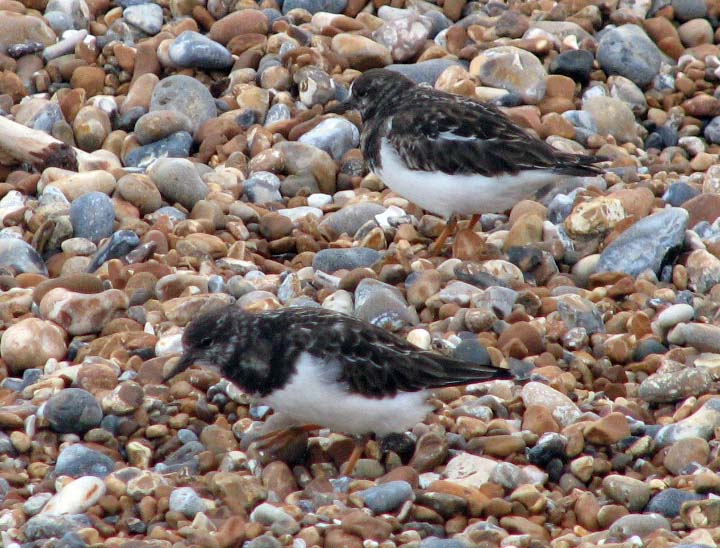
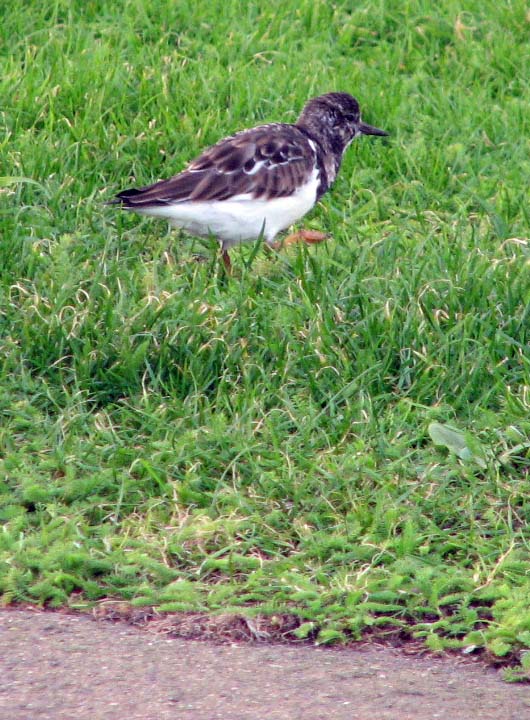
Turnstones (Arenaria interpres) in Bexhill


I was watching a small flock of turnstones working their way over the shingle beach in a very urban part of Bexhill-on-Sea this afternoon.

I was surprised when they hopped up on to the promenade and wandered about like so many little town pigeons. Eventually they crossed to the wide strip of close-mown amenity grassland backing the promenade and were still busily feeding there when I left.

This small water-bird is generally widespread round the coast of Britain in winter.

Tuesday, November 07, 2006

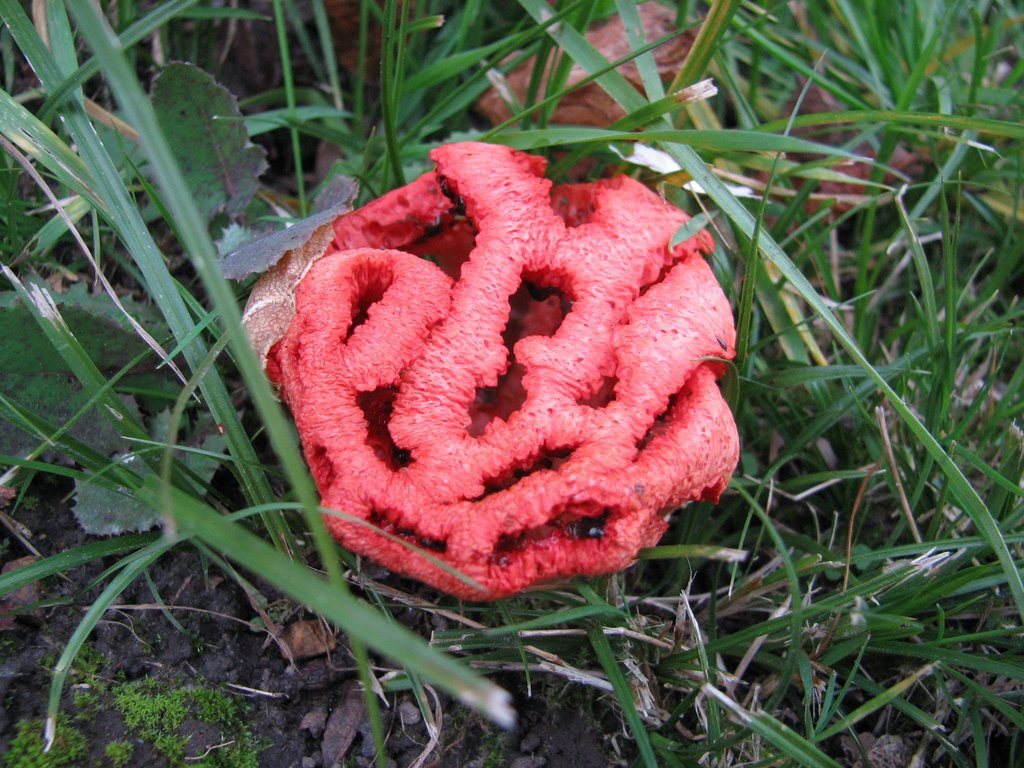
Red cage fungus, Clathrus ruber


Walking down to the village shop in Sedlescombe, East Sussex today I was surprised to see a perfect fruiting body of a red cage fungus, Clathrus ruber.

It was growing among grass at the base of a hedge by a well trodden path close to the main road and it is the first time I have ever seen one.

Roughly the size of a tennis ball, this strange vegetable is a type of stinkhorn and does have a very bad smell to attract the flies that spread the spores found in the gooey black slime inside the lattice. From a distance it did not look like a living thing at all but more of a convoluted and twisted piece of plastic the product, maybe, of a 5 November bonfire.

The red cage is another one of these 'Mediterranean' species that are extending their range supposedly due to the warming of the climate and has followed very much the same route as the ivy bee, Colletes hederae, appearing first in the Channel Islands then later along the south coast and the West Country. I have not yet found any previous Sussex records, but I am sure there are a few and would be interested to hear from anyone if they know of any.

Sunday, November 05, 2006

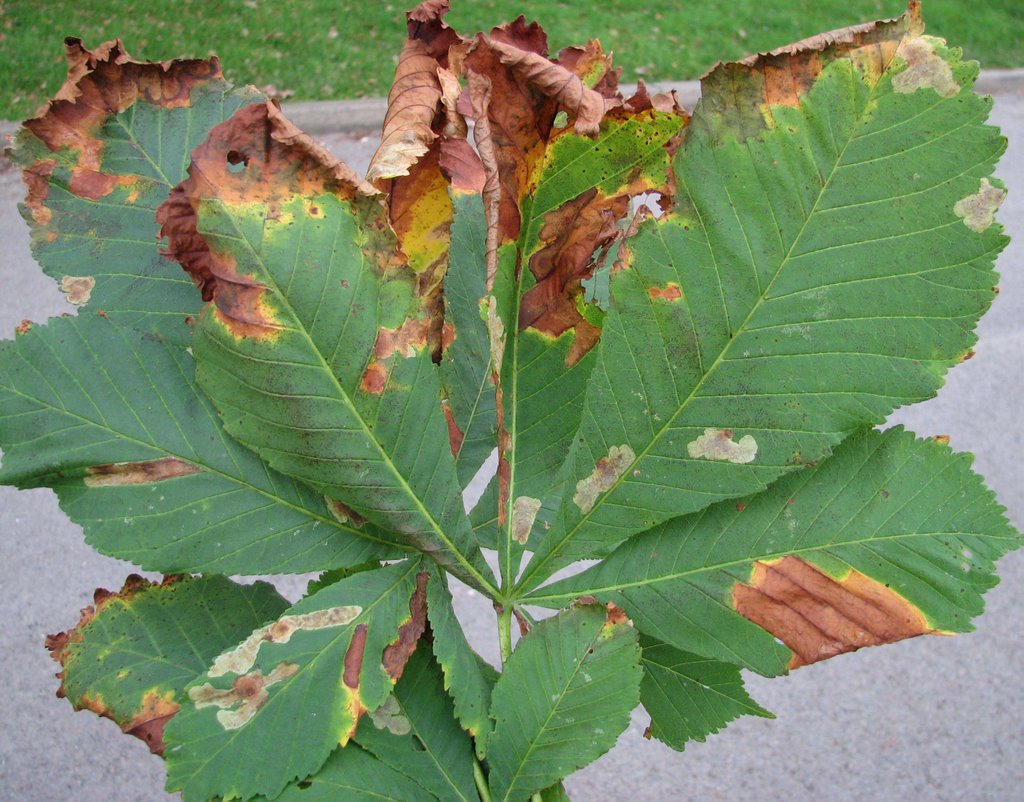
Horse chestnut leaf miner, Cameraria ohridella


Today I found a large horse chestnut in Oaklands Park, Sedlescombe, quite heavily infested by the fairly-new-to-Britain leaf mining moth Cameraria ohridella. I think this must already have been recorded in Sussex though I have not been able to find anything specific.

This species, which has been much in the news lately due to the damage it is doing to horse chestnut trees, was was first observed in Macedonia in the late 1970s and was described as a new species of the genus Cameraria in 1986. In 1989 it appeared unexpectedly in Austria and has since spread throughout central and eastern Europe. It was first found in the UK in Wimbledon in July 2002 and has since been recorded in many parts of south-east England.

Brown patches on horse chestnut leaves are also caused by the fungus Guignardia aesculi and these may be confused with mines of C. ohridella. However,the blotches caused by the fungus are often outlined by a conspicuous yellow band and do not appear translucent when held up to the light.

In the picture above the difference between the greyish white blotches of the leaf mines and the darker brown, yellow edged patches caused by the fungus can be clearly seen.

For more details on the moth and of the Forestry Commission survey of its spread follow this link.

Tuesday, October 24, 2006

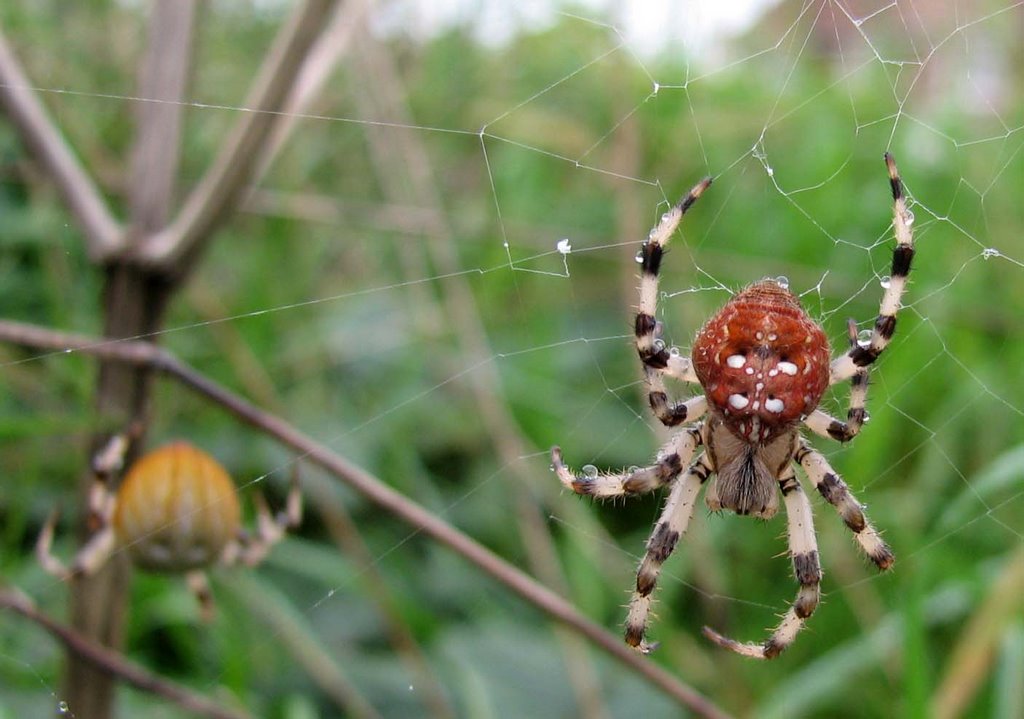
Two spiders, Araneus quadratus


On a wet afternoon in a rough field locally, I noticed these two spiders low down in the grass. They are both Araneus quadratus, an orb-web species, and both appear to be females. The one on the right seems to have laid all her eggs, hence the slightly shrivelled abdomen, while the one on the left is waiting to go.

Although the two seem quite at ease with the world, the situation had a certain air of menace about it and I suspect both spiders are very alert to the other's presence. This species is quite variable in colour as the picture shows.

Sunday, October 22, 2006

Leocarpus fragilis in Flatropers Wood


Yesterday I led a walk around Flatropers and Bixley Woods looking for fungi and anything else we could find. Fungi were interesting but not quite as abundant as one might have expected after a warm and relatively wet late summer.

One organism that was new to me was the slime mould Leocarpus fragilis (a Myxomycte, not a fungus). A small patch on a dead Scot's pine needle stood out on the woodland floor due to its bright chrome yellow colour. I put it in a tube for later inspection and, when I had a closer look in the evening, it had turned from a yellow plasmodium (the slime stage) into the greyish brown, grape-like fruiting bodies shown above. Some remnants of the yellow plasmodium can still be seen.

Identification was relatively easy using The Myxomycetes of Britain and Ireland by Bruce Ing (Richmond Publising, 1999)